
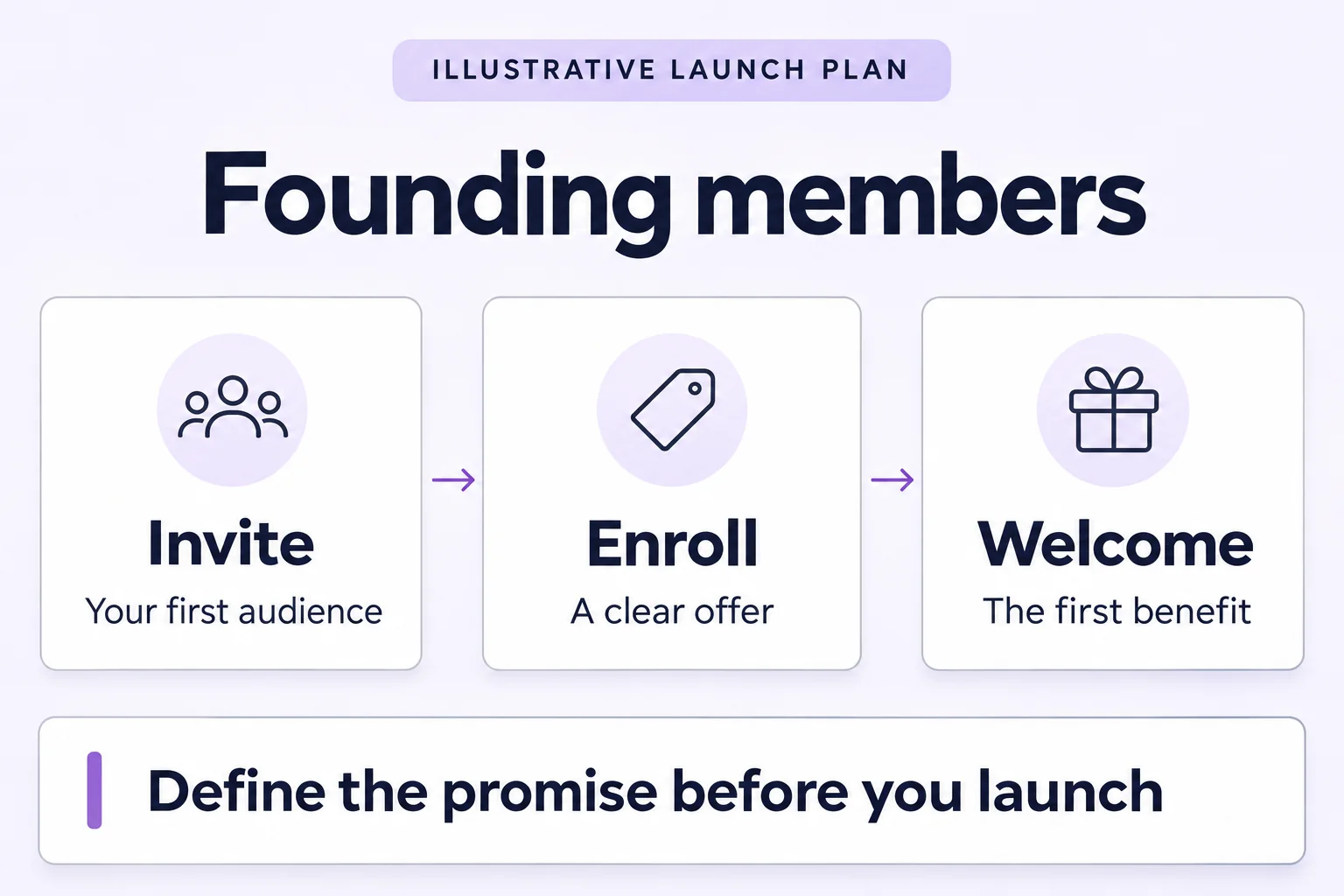
What is a founding-member program?
A founding-member program is the first defined enrollment group for a new membership, store or offer. Customers join early in exchange for clearly described benefits, such as introductory pricing, store credit or access to a member collection. A familiar label cannot replace a useful offer: customers still need to know what they pay, receive and can use.
It can suit an established Shopify store introducing its first membership or a retailer with an audience preparing a new location. This guide covers the launch decisions: who to invite, what to promise, how to close enrollment and what to learn. For the mechanics of collecting one payment and issuing credit in installments, use the prepaid membership guide.
One real example of the format is FERMA Coffee's founding-member offer, which combines prepaid store value with opening perks. It illustrates how a founding offer can be packaged; it is not a Memberply case study or evidence of a particular sales outcome.
1. Invite people who can use the first benefit
Start with a specific group: repeat buyers of an eligible collection, regular in-store shoppers, or people who explicitly asked to hear about the launch. Review buying frequency and benefit fit before using lifetime spend alone to choose the audience.
On smaller screens, scroll to see every column.
| Audience | Reason to consider them | Question to answer |
|---|---|---|
| Repeat product buyers | They already have a natural use for credit or access. | Will the benefit help with purchases they actually expect to make? |
| Regular local customers | They can try a new in-store membership experience. | Can staff recognize the member and complete the promised redemption? |
| Interested launch subscribers | They have asked to hear when the offer is ready. | Do they understand the opening date and when benefits become usable? |
| One-time or occasional shoppers | Some may value a specific access benefit. | Would an ordinary purchase or gift card serve them better? |
Keep the invitation list within the channels and permissions you already manage. Being a previous customer is not the same as having agreed to every marketing channel. Use the membership marketing guide to plan placements and follow-up.
Choose a cohort size based on onboarding time, inventory and support capacity. If you advertise a fixed number of places, have a tested way to enforce it. If you cannot enforce a count, use a genuine enrollment deadline and explain the terms without a misleading countdown.
2. Price a promise you can fulfill
Choose one core benefit and one clear access period before adding extras. Founding-member pricing might mean a lower introductory fee, the same fee with an extra benefit, or recognition and early access. A discount is not compulsory.
On smaller screens, scroll to see every column.
| Offer | Why it can work | What to define |
|---|---|---|
| Introductory membership price | Makes the first purchase easier to evaluate. | How long the price applies and what any later renewal costs. |
| Prepaid credit plus access | Combines spending value with a reason to join early. | Total credit, delivery dates, expiry and exactly what access includes. |
| Access-led membership | Fits an audience that wants specific member products or experiences. | Which products or experiences are available and whether they cost extra. |
An illustrative six-month founding offer
A fictional refill retailer invites its regular customers to a six-month founding membership. The customer pays $90 once and receives three $30 credit grants: when membership starts, one month later and two months later. They can also access a named member-only collection during the six-month term. Products in that collection cost extra; inventory is not guaranteed.
On smaller screens, scroll to see every column.
| Decision | Fictional offer |
|---|---|
| Payment | $90 once; no automatic renewal. |
| Membership access | Six months from the membership start date. |
| Credit | $90 total: three monthly $30 grants. Each grant has No Expiry in this example. |
| Founding benefit | Access to the named member-only collection for the six-month term. |
| Enrollment window | 1–14 December 2026, closing at 5pm in the store’s published time zone. |
| After six months | Membership access ends. Already-issued credit retains its own expiry terms. A later membership requires a new purchase. |
This example returns the payment as spending value; it does not include a cash bonus. Customers must value the access benefit and be comfortable paying in advance. Set your own refund terms and explain them beside the offer before accepting purchases.
For 20 purchases, gross receipts are $1,800 and the promised credit is also $1,800. Budget the products supplied when that credit is spent, fulfillment, software and payment charges, refunds and support. Spending the credit is not a second cash receipt. Compare the result with what these customers would have purchased without joining.
A limited first offer can be easier to support than an undefined lifetime discount. Separate lasting recognition as an early customer from the duration of paid benefits. Use the membership pricing guide to test costs before choosing the price.
3. Connect the offer to a clear Shopify purchase
In Memberply, create a One-time payment tier with the agreed access period, then configure only the benefits included in the offer. For scheduled credit, set up Loyalty Drops on that exact tier before taking signups. Keep access active through the final scheduled grant. Configure member-only products separately if they are part of your promise.
One-time tiers can choose a first-credit date or delay and a fixed payment count and total credit. A shared first-credit date does not close sales. Late joiners start when they join without earlier installments. See the Loyalty Drops setup instructions and the worked prepaid schedule.
Put the offer terms and purchase action together. Include the price, access length, benefits, credit dates, expiry, enrollment deadline and refund terms. Explain which products still require payment. Follow the membership landing-page guide for the wider page structure.
Before inviting anyone, test the membership purchase, sign-in, first benefit and later redemption. If your offer is used in store, test the actual Shopify POS workflow. No founding-member label, badge, signup cap or automatic sales-closing feature is implied by this launch plan.
4. Make the invitation specific
Explain why this first group is receiving the invitation, what the offer includes and what happens next. Keep the launch message consistent with the checkout terms. A customer should not have to calculate the credit schedule from several emails.
Fictional invitation for the offer above
We’re opening our first membership for customers who regularly shop our refill range. Join for $90 once and receive $90 in store credit across three monthly drops, plus six months of access to our member-only collection. Products in the collection are purchased separately.
Enrollment closes on 14 December at 5pm [store time zone]. There’s no automatic renewal. See the full benefit schedule, refund terms and joining details on the membership page.
Replace the example with your actual offer and time zone before using it. Send a reminder only while joining is still possible and through an appropriate channel. After purchase, switch to a welcome message that explains sign-in, when the first benefit becomes available and where to get help.
Do not tell someone they have unused credit unless you have verified the balance. If the first grant is due at signup, allow for processing before stating it is ready to spend. The membership email examples explain these communication stages.
5. Close enrollment without ending existing benefits
Assign one person to own the closing date and make a list of every place the founding offer can be bought. Removing one page or banner may leave a cart link or upsell active.
On smaller screens, scroll to see every column.
| Action | Evidence to keep |
|---|---|
| Stop new purchases | A test confirms new customers cannot buy through the product page, direct cart links, upsells or any in-store route you use. |
| Update invitations and placements | Landing page, storefront links and scheduled reminders no longer invite customers to the closed offer. |
| Preserve existing members | An enrolled member can still sign in and use the benefits promised for the original term. |
| Check future credit grants | Closing sales has not disabled the tier or benefit needed for scheduled credits. |
| Explain the next option | A waitlist or a later offer has its own terms; existing members are not silently moved to a new price. |
Use a tested sales-availability method appropriate to your Shopify setup. This checklist does not claim Memberply automatically enforces a campaign deadline or member count. Avoid deleting the tier or disabling Loyalty Drops as a shortcut to closing enrollment: that can interrupt the benefits you still owe.
If a later offer has different credit amounts or dates, use a separate tier. Once campaign payments have started, their payment terms are locked. Keep a record of the founding offer customers actually purchased.
6. Measure benefit use, not just launch receipts
Record the first cohort separately so you can see where people hesitate and whether the promise is being delivered. Keep denominators consistent: invitations delivered, unique offer-page visitors, paid enrollments and members with an available benefit are different groups.
On smaller screens, scroll to see every column.
| Measure | Example and interpretation |
|---|---|
| Paid enrollment | 12 purchases from 80 unique offer-page visitors = 15%. This is a fictional page conversion rate, not an invitation conversion rate or benchmark. |
| First-benefit use | 8 of 12 members redeem some available credit within 30 days = 66.7%. Check which grants were actually due. |
| Outstanding credit | Separate credit already issued but unspent from future credit still promised. |
| Customer experience | Record setup questions, failed redemptions, refunds and reasons people did not join. |
| Business outcome | Compare contribution and purchase behavior with a suitable baseline; early members may already be your most loyal shoppers. |
If enrollment is weak, investigate whether the audience, price or promise is unclear before adding more perks. If members join but cannot use benefits, fix the first-use experience before expanding. If credit use is high but margin is weak, revise the next offer while preserving existing commitments.
Use the first cohort to decide whether to repeat, change or stop the offer. Expanding the invitation list is a separate decision from successfully configuring a membership.
Founding-member program questions
What is a founding-member program?
A founding-member program is a defined first enrollment group for a new membership, store or offer. Its value comes from the benefits and terms you promise those early customers, not the founding label alone.
Does a founding membership have to be a subscription?
No. Choose one-time payment for a defined access period or recurring billing for an ongoing offer. State the payment, access period and any renewal terms before purchase.
Should founding members get a lifetime discount?
Only offer a commitment you can support for its full stated duration. A defined six- or twelve-month benefit is easier to budget and explain than an undefined lifetime promise. Separate recognition as an early member from the duration of paid benefits.
Can founding members receive store credit over time?
Yes. Memberply one-time tiers can use Loyalty Drops with a first-credit date or delay, payment count and total credit. Membership access must remain eligible through the final grant. Follow the prepaid membership guide for the detailed schedule.
Does a credit start date automatically close enrollment?
No. Credit timing and sales availability are separate. Choose an enrollment deadline, assign someone to close every purchase route and verify that new customers can no longer buy the founding offer.
How many founding members should a store accept?
Start with the number your team can onboard and fulfill reliably. Use a genuine capacity limit or a clear enrollment window, and test how you will enforce it. There is no universal ideal founding-member count.